
It’s now February, and likely you have moved on from 2018 best-of lists. If you still haven’t made it there yet, no worries — here is a short list to get you started. These five books are my favorite reads of 2018, although only one of them was written last year. I’ve described what each book is about and what was meaningful to me. Please share if any of them make a difference for you. Here’s to a successful year full of joy, love, and continuous learning!
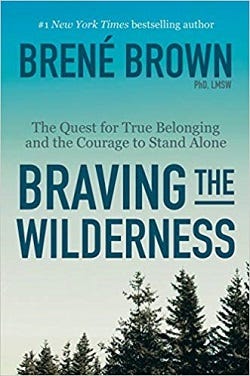
In Braving the Wilderness, Brené Brown does a wonderful job of connecting the voice of her many years of research with the voice of our hearts. Brené describes a path to what she calls “true belonging”, accomplished through the elements of her BRAVING acronym: boundaries, reliability, accountability, vault, integrity, non-judgment, and generosity. Brené calls this “braving the wilderness”, which requires showing up and being real for the people around us, regardless of the cost.
Brené asks us to recognize the posturing, name-calling, and finger-pointing that is so common today for what it is — dehumanizing rhetoric that divides us, especially in political discourse. She describes this as a crisis of spiritual disconnection that is saturated with incivility, posturing, pleasing, and perfectionism. Brené expertly describes the “ideological bunkers” that we create while hiding in our social media echo chambers as just one example that keeps us divided, either intentionally or by default.
She also makes strong arguments for trying to understand what we fear, which will change your perspective on diversity and spark renewed appreciation for the differences between people. Brené believes that it is hard to hate people up close up and that if we will move toward each other, we can change our lives and the world. This book broadened my definition of courage to include standing alone with character and conviction when needed, even against the groups to which we belong.
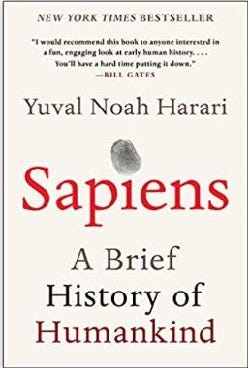
Sapiens: A Brief History of Humankind (2018) by Yuval Noah Harari
This is among the most fascinating and occasionally provocative books I have read. Yuval Noah Harari weaves together a fascinating view of the evolution of mankind while asking some very difficult questions, like: why did only Homo Sapiens survive out of six evolutionary versions of humans? Harari answers this question using science, storytelling, and history to walk readers through Homo Sapiens three major developmental periods: the Cognitive, the Agricultural, and the Scientific.
Harari explains the importance of Homo Sapiens uncanny ability to band together in large groups for the “greater good”, and the incredible impact of our shift from a society of hunter-gathers to one based on agriculture. Nothing is off the table for Harari, who expertly describes how our shared myths -such as money, religion, and companies — help keep us in line. Harari also presents some challenging ways he views the role of God, which made me think about the creation story in a fresh, deeper way.
Sapiens explains why we are the most dominant, beautiful and also destructive species on earth and repeatedly asks us to consider one question while walking through our history — is this all real progress, and are we all happier and better for it?

The Obstacle Is the Way: The Timeless Art of Turning Trials into Triumph (2014) by Ryan Holiday
This book is a must read for anyone that struggles to maintain perspective when life gets tough. Marcus Aurelius, known as Rome’s “philosopher king” wrote almost 2000 years ago “The impediment to action advances action. What stands in the way becomes the way” in his private memoirs. Ryan Holiday uses this theme from the ancient Greek philosophy of Stoicism to give us perspective when dealing with adversity. In true Stoic fashion, Holiday reminds us that there are two parts to understanding events — the event itself and the story we tell ourselves about what it means. Whether or not you are interested in or know anything about Stoicism, there is plenty of solid advice for overcoming today’s challenges.
Holiday uses dozens of examples from ancient times to today where people have used Stoicism to overcome pain and develop resilience. There is a lot of actionable advice in this short read- including the mental state necessary and three critical steps to overcoming any challenge. This book provides a good path for changing obstacles from roadblocks to game changers by using Stoic principles — like focusing on what we can control and letting go of everything else.
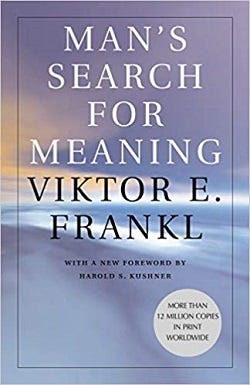
Man’s Search For Meaning(2006) by Viktor E. Frankl
Originally published in 1946, this book is a self-witnessed account of life in Nazi death camps and lessons on spiritual survival by Psychiatrist Viktor Frankl. Dr. Frankl’s parents, brother, and pregnant wife perished while he labored from 1942 and 1945 in four different camps, including Auschwitz. Through these events, he developed the theory-known as logotherapy, (from the Greek word logos for “meaning”) that describes our primary drive in life as the discovery and pursuit of what we personally find meaningful. Dr. Frankl determined that we cannot avoid suffering, but we can choose how to cope with it, find meaning in it, and move forward with renewed purpose.
Although this book is full of disturbing imagery from the concentration camps, it also shows the beauty and resilience of the human spirit. Dr. Frankl describes the difference between those that survive and those that don’t as having something to look forward to, even after experiencing the worst imaginable circumstances himself. He determined that this connection to something greater than oneself can only be severed by the choices of the person that is suffering, and that “happiness cannot be pursued; it must ensue.” This book is a powerful testimony on the nature of mankind and what makes us human, both good and bad.
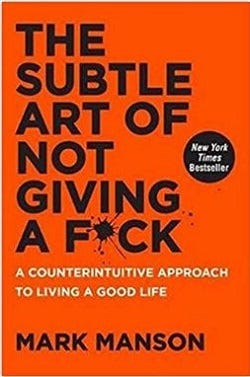
The Subtle Art of Not Giving a !@#$: A Counterintuitive Approach to Living a Good Life(2016) by Mark Manson
When I first saw recommendations about this book, I dismissed them because of the title. When I decided to look closer, I was reminded why the cliché “never judge a book by its cover” has stood the test of time. In this New York Times bestseller, Mark Manson helps us see our current stay positive, feel-good culture through a different lens, and teaches some hard lessons about what it takes to be truly happy. Mark argues that what we have been told about continuous positive thinking is BS, that our lives will always have problems, and that our success has a lot to do with getting better problems. What’s not ok, according to Mark, is spending our energy on false positives and mindless pursuits.
Manson also contends that improving our lives isn’t about turning lemons into lemonade, but on learning to stomach lemons better. He believes that by getting to know our limitations, embracing our fears, and confronting painful truths, we can find the courage, perseverance, honesty, and responsibility we all want. Because there are only so many things we can give a !@#$ about, we need to figure out what things really matter. For example, Manson believes that although money is nice to have, caring about what you do with your life is worth giving a lot more !@#$s about.
Manson makes good arguments for allowing our intentions and behaviors to be driven by values, rather than what may feel good or is expedient. He explains that all behaviors are driven by what we value and that if we want to change things, we must change what we value and provides a sensible path to do so. There are dozens of poignant examples of the stories we tell ourselves, cautions of ego-driven behavior, and the dangers of entitlement. If you do judge this book by its cover, you can easily replace the “F” word with fun, fresh, or fantastic.


 Want to increase your energy, optimism, and empathy? Then increase your gratitude.
